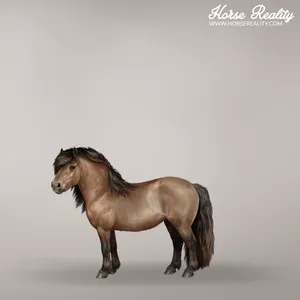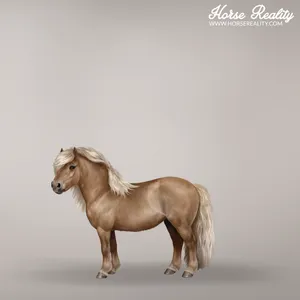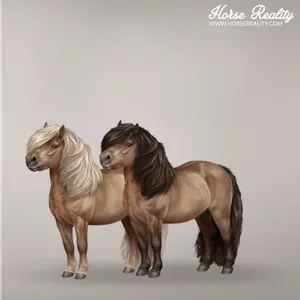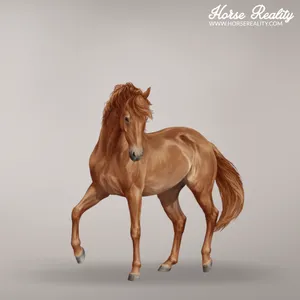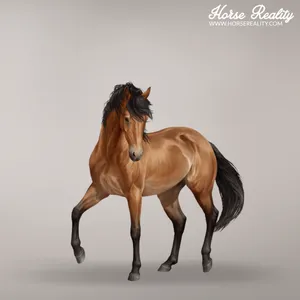
Appearance
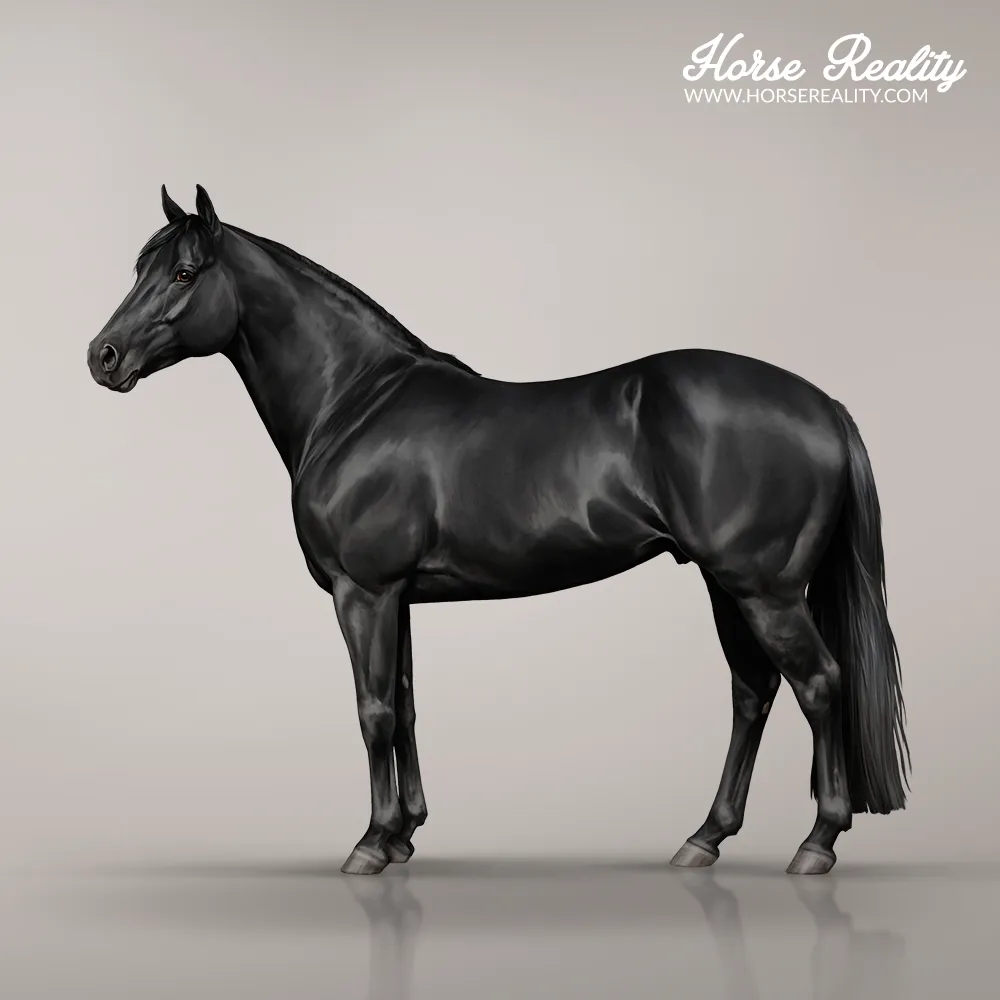
Black horses have a completely black coat, including the points of the horse. Splashed white patterns tend to express more loudly on black/bay-based horses.
| Foals | 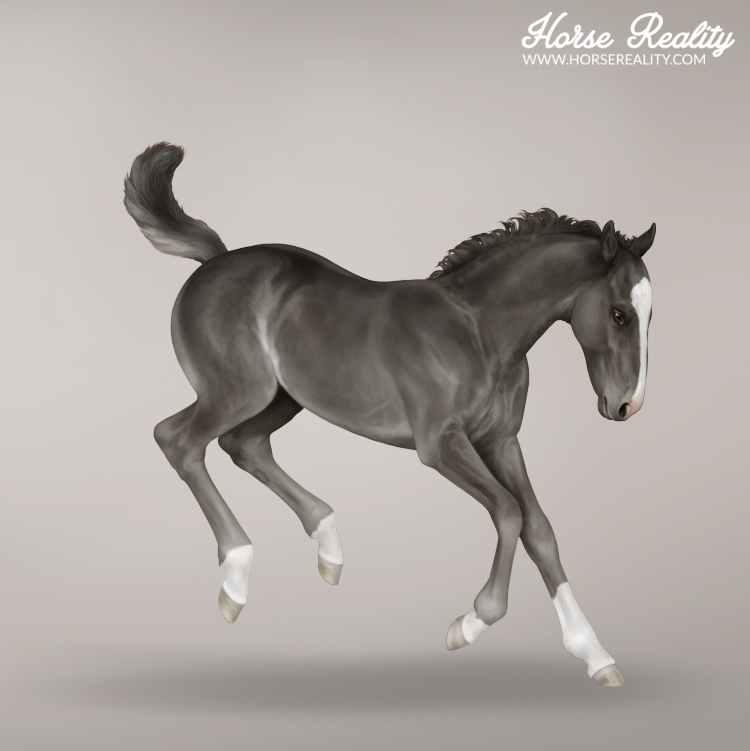 |
Foals are usually born with a more greyish colour. This is caused by foal camo. The amount of foal camo that is present can differ: Friesians are typically born darker, for example. |
|---|
| Black shades can vary from pitch black to sun-faded black: some black horses will “sun bleach”, which can be a result of exposure to sunlight, sweat, etc. or dietary or genetic factors. | 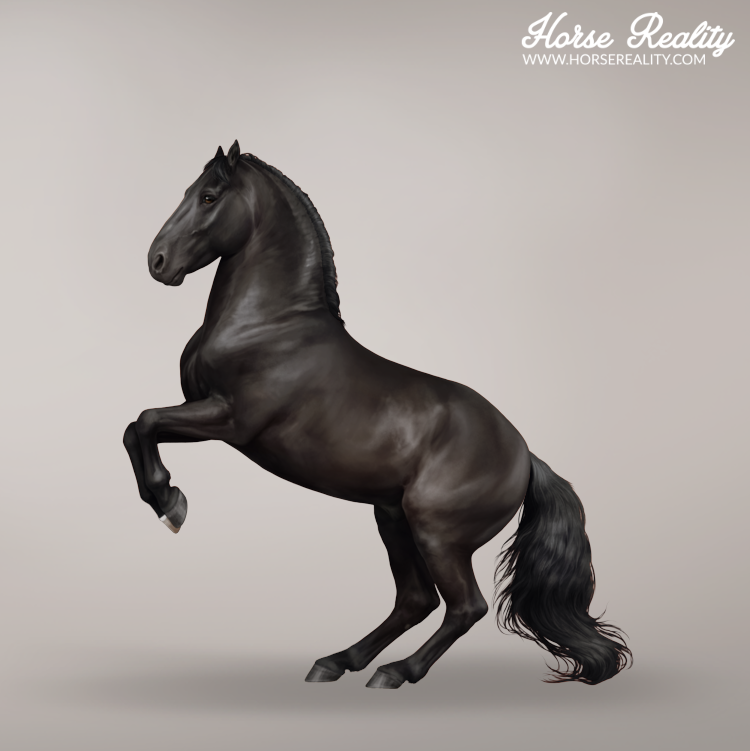 |
Adults |
|---|---|---|
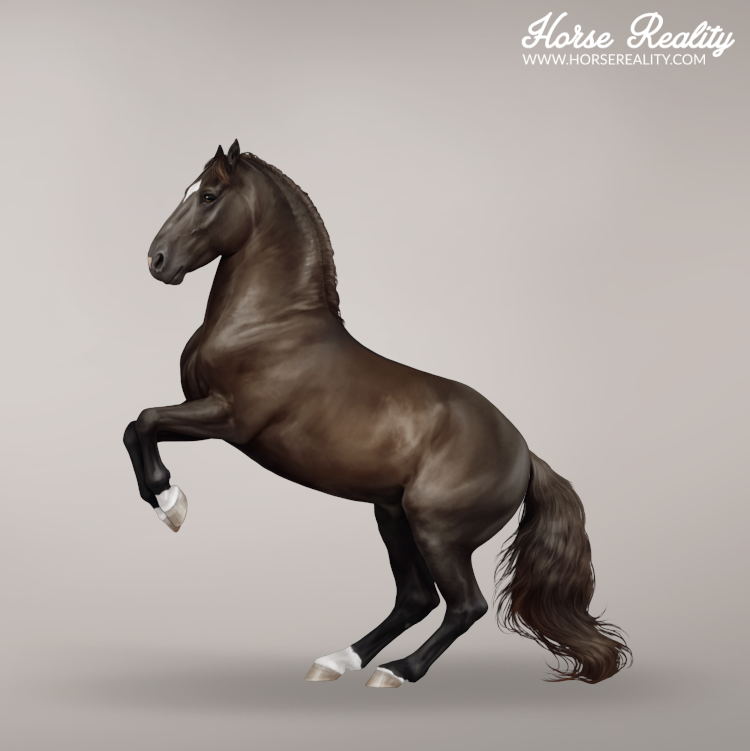 |
Mimics
Other colors can look similar to black. Sun-faded black can look similar to very dark (sooty/liver) chestnut shades. Black and smoky black are visually not distinguishable from each other; genetic testing (or pedigree info) is needed.

Look at the points of the horse
Look at the soft parts of the horse (eyes/muzzle, flanks,…)
These parts should be black in colour
Genetics
The base color black is controlled by the extension gene and the agouti gene.
The extension gene controls the production of red and black pigment. Horses need at least one copy of the dominant E-allele (E/E or E/e) to be able to produce black pigment.
The agouti gene controls the distribution of black pigment. The dominant A-allele causes black pigment to be restricted to the points of the horse. As a result, horses need two copies of the a-allele (a/a) to be uniformly black.

Black:
E/E + a/a
E/e + a/a
Horses that are E/E are sometimes referred to as "homozygous black", "only throws black", etc. However, these horses' coats can still be affected by other genes, and what their foals would look like also depends on the other parent.
Breeding two black-based horses will always result in either a black or chestnut-based (in case both parents are E/e) foal. Chestnut and bay-based horses can only have a black-based foal if they aren't homozygous dominant (A/A) for agouti, so that is important to keep in mind when the aim is to breed a black-based horse.
Presence in horses
Black coats are widespread, although they tend to be less common than the other base coats, chestnut and bay. Breeds like the Friesian Horse or Murgese are almost exclusively black, while in other breeds, such as the Haflinger or Cleveland Bay, black is rare or even not present at all.
Read more:
Chestnut | Bay | Smoky black | Smoky cream | Black pearl | Smoky black pearl Black snowdrop | Black dun | Black nd1 | Smoky dun | Silver black | Silver smoky black
Articles
- Marklund, L., Moller, M. J., Sandberg, K., & Andersson, L.; A missense mutation in the gene for melanocyte-stimulating hormone receptor (MCIR) is associated with the chestnut coat color in horses, Mammalian Genome, 1996; 10.1007/s003359900264
- Wagner, H-J., & Reissmann, M.; New polymorphism detected in the horse MC1R gene; Animal Genetics, 2000; 10.1046/j.1365-2052.2000.00655.x
Learn while playing! Discover how genes shape colors and patterns in our realistic horse breeding game, Horse Reality